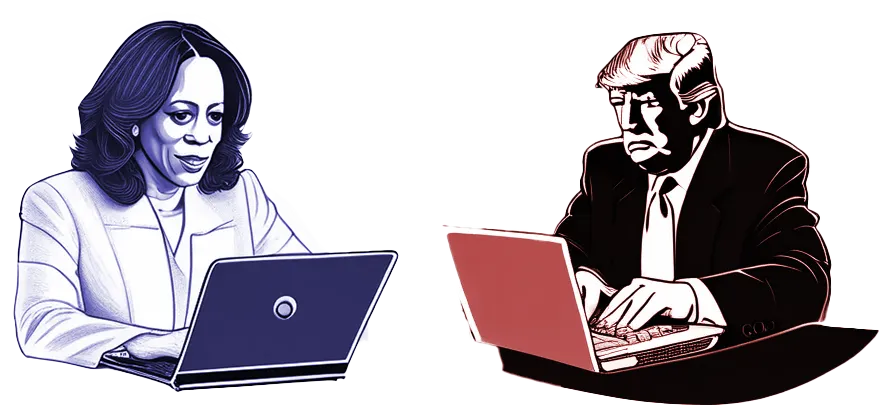
According to Technology Review's analysis "Three Technology Trends Shaping the 2024 Elections" (Technology Review, 2024), data analytics and audience segmentation emerged as game-changers in the 2024 elections, leading the transformation of political campaigning. This shift mirrors the evolution in business practices, making political campaigns an ideal case study for business education.
The New Campaign Playbook
Modern political campaigns have become laboratories for advanced data analytics and digital strategy. As reported in "What AI Is Doing to Campaigns" (Politico, 2024), both candidates deployed sophisticated data analysis tools to understand and engage their base. "What we're seeing is the convergence of political strategy and business intelligence," explains their report on campaign technologies.
The Harris campaign's approach to digital engagement particularly exemplified this trend. Their team collaborated with micro-influencers across social platforms, crafting content that resonated with specific demographic segments. As documented in "Perplexity AI Election Voting Information Hub" (The Verge, 2024), the Trump campaign excelled in targeted messaging through established social media channels, demonstrating the kind of precise audience segmentation that business students must master in today's digital economy.
Bridging Theory and Practice: The Role of Simulation
This is where MISsimulation enters the picture. The platform offers business students the opportunity to experience firsthand the same challenges and strategies deployed in real-world campaigns. Through simulated campaign management, students work with multiple data sources, from voter registration records to social media analytics—mirroring the complex data landscape of modern political campaigns.
"The Verge's coverage of election tracking technologies highlights how campaigns must adapt strategies in real-time based on constituent feedback."
MISsimulation replicates this dynamic environment, allowing students to:
- • Analyze diverse data sets to identify target audiences
- • Develop and adjust messaging strategies based on real-time feedback
- • Manage resource allocation across different regions
- • Track the effectiveness of both offline and online campaign efforts
Real-World Skills in a Controlled Environment
Technology Review's analysis (2024) emphasizes how campaigns used "sophisticated audience segmentation to deliver personalized content addressing specific concerns of different voter groups." This practice directly parallels modern business strategies, where companies must segment markets and tailor their approaches accordingly.
In the simulation, students engage with these same principles, making decisions about:
- • Resource allocation across different regions
- • Message targeting based on demographic data
- • Social media strategy and influencer engagement
- • Response to competitor actions
The Future of Business Education
"The 2024 election has demonstrated that data literacy and digital strategy are no longer optional skills—they're fundamental to modern campaign and business success," observes The Verge's analysis of election information systems (The Verge, 2024). This reality is pushing business schools to adopt more hands-on, experiential learning tools.
Preparing Tomorrow's Leaders
As political campaigns continue to evolve alongside business practices, the skills needed for success in both arenas increasingly overlap. As Technology Review (2024) notes, data analytics and digital engagement have become essential tools for both political operatives and business leaders.
Through platforms like MISsimulation, business schools are ensuring their students graduate with not just theoretical knowledge, but practical experience in using data to drive decisions. As concluded in "Three Technology Trends Shaping the 2024 Elections" (Technology Review, 2024), "The line between political campaign strategy and business strategy continues to blur, creating new opportunities for innovation in both fields."